Spanish at the table · A1–B1
The board lists patatas bravas three times: tapa, media ración, ración. You want potatoes for the table, not three different recipes. Choose the dish and the portion: a tapa is a small serving, a media ración a half portion, and a ración a larger portion often ordered to share. Say Una ración de patatas bravas para compartir, por favor. That means “A portion of patatas bravas to share, please.”
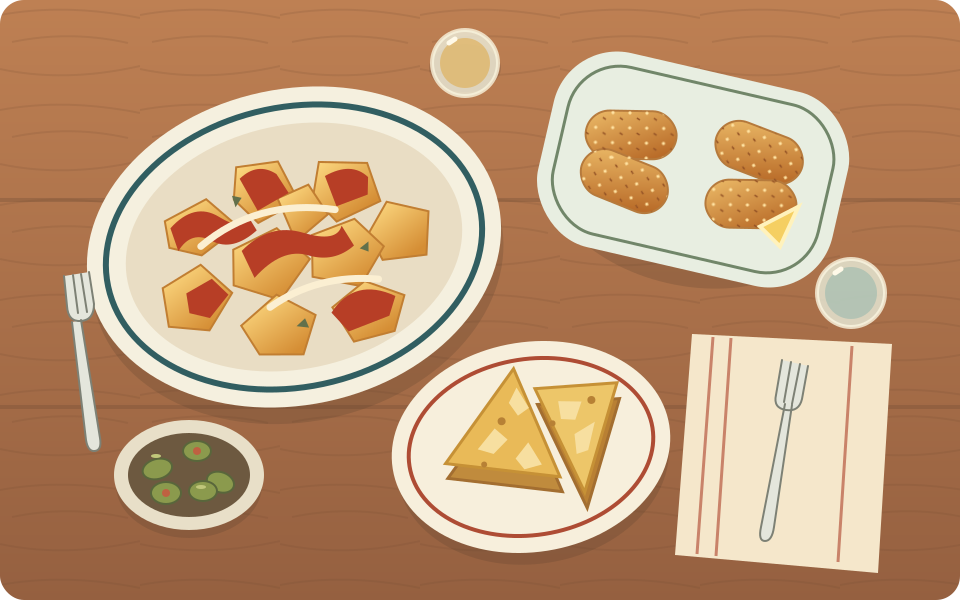
Tapa, media ración or ración?
These words help you compare options within one establishment. They do not tell you an exact weight or how many people a dish will feed. A ración of croquetas might suit a group alongside other dishes; it is not automatically a complete meal for each person. Some places offer all three sizes, others only one or two.
- Tapa
- A small serving for tasting or a snack. It may be a few bites, but there is no national piece count.
- Media ración
- A half portion of that establishment's dish, if available. Look for media or ½ ración on the menu.
- Ración
- A larger serving, commonly shared. Ask how much comes with it rather than treating it as “food for two.”
¿Tenéis medias raciones? means “Do you have half portions?” If you need a number, ask ¿Cuántas croquetas vienen en la ración? (“How many croquetas come in the portion?”). The answer matters more than the plate's name. Check the price beside the size you choose, too.
Three dishes you can recognise
Patatas bravas are fried potatoes with brava sauce, usually spicy. The sauce and heat vary; some versions also come with alioli, a garlic sauce. Ask ¿Pican mucho? (“Are they very spicy?”). For sauce separately, try La salsa aparte, por favor. Do not assume a red sauce has one fixed recipe.
Croquetas have a crisp coating and a soft filling. Ham is a traditional choice, but menus also offer mushroom, cod and other versions. ¿De qué son las croquetas? asks “What kind of croquetas are they?” De jamón means ham; de setas means mushroom. A mushroom label alone does not confirm every ingredient or how they are cooked. For allergies, tell the staff clearly and confirm suitability before ordering.
Tortilla de patatas is a potato-and-egg omelette, often with onion. It is not a flatbread. A pincho de tortilla is a piece of it; the cut and serving size depend on the bar. ¿Lleva cebolla? means “Does it contain onion?” Here, lleva asks what a dish contains, not what someone is carrying.
Patatas is the common potato word on menus across much of Spain. Papas is regional too, especially familiar in the Canary Islands: papas arrugadas are small, salt-cooked potatoes served with mojo. They are not another name for bravas. Follow the wording on the local menu rather than correcting it.
Build a shared order
Who is eating, and how hungry are you?
These invented bar conversations practise different decisions, not guaranteed quantities. Read all three, or choose a situation to focus on its order and follow-up.
One person: a piece of tortilla
Choose one item before committing to several plates. You can ask for something else later if the kitchen is still serving.
You: Un pincho de tortilla, por favor. A piece of tortilla, please.
Server: Claro. Es de patata y cebolla.Of course. It's potato and onion.
You: ¿Y las croquetas de qué son? And what kind are the croquetas?
Server: Hoy son de jamón.Today they're ham.
Two people: try two half portions
Ask about availability first. Half portions can let you try different dishes without ordering two full servings.
You: ¿Tenéis medias raciones? Do you have half portions?
Server: Sí, de bravas y de croquetas.Yes, of bravas and croquetas.
You: Pues media de cada, para compartir. Then half a portion of each, to share.
Server: Muy bien. ¿Algo más?Very good. Anything else?
You: De momento, nada más, gracias.Nothing else for now, thank you.
Four people: ask about the quantity
Say how many you are, then check the recommendation. “For four” describes your group, not a standard ración size.
You: Somos cuatro. ¿Qué nos recomiendas para compartir? There are four of us. What do you recommend for sharing?
Server: Podéis empezar con bravas, croquetas y tortilla.You could start with bravas, croquetas and tortilla.
You: ¿Cuántas croquetas vienen en la ración? How many croquetas come in the portion?
Server: En este bar ponemos ocho.In this bar we serve eight.
You: Bien. Una ración de bravas, una de croquetas y dos pinchos de tortilla.Good. A portion of bravas, one of croquetas and two pieces of tortilla.
Three practice orders: start small, compare half portions, or ask about a shared serving.
Sharing is an option, not a rule for every plate
Para compartir means “to share.” It tells the server that the dish is for the table. If you need small plates, ask ¿Nos traes unos platos pequeños, por favor? (“Could you bring us some small plates, please?”). Agree on dishes with your companions before ordering; nobody needs to order an identical number of tapas.
The conversations use tenéis, the informal plural “you have” common in Spain, and recomiendas when addressing one server informally. For a more formal question to one person, use ¿Qué nos recomienda? Keep por favor and gracias; short orders need not sound abrupt.
Are tapas free? And are they the same everywhere?
A free tapa is not guaranteed. Spain's tourism board notes that some places include one with a drink; in others, you order and pay for food separately. Ask ¿La bebida incluye tapa? (“Does the drink include a tapa?”). A complimentary bite does not mean every dish on the board is included.
Regional menus also change what you order. Basque bars have their own pintxos culture in San Sebastián; Galicia offers dishes such as pulpo a la gallega. The Canary Islands' papas and mojo are another example. Bravas, croquetas and tortilla are useful starting words, not a checklist every bar must offer.
When you have enough, La cuenta, por favor. asks for the bill. For seating, drinks and the wider meal, continue with how to order at a restaurant in Spain.
Practise beyond the menu
Read a scene in the Spanish short-story library, with translations and audio, or get a free weekly Spanish story at your chosen level. Start by recognising one useful follow-up: ¿Algo más? means “Anything else?”