For the classic chicken, rabbit and bean rice dish in Valencia, order paella valenciana, not simply “paella.” Before confirming, ask how many portions you must order, whether the price is per person, and how long preparation takes. Those three answers matter more than memorising a long speech.
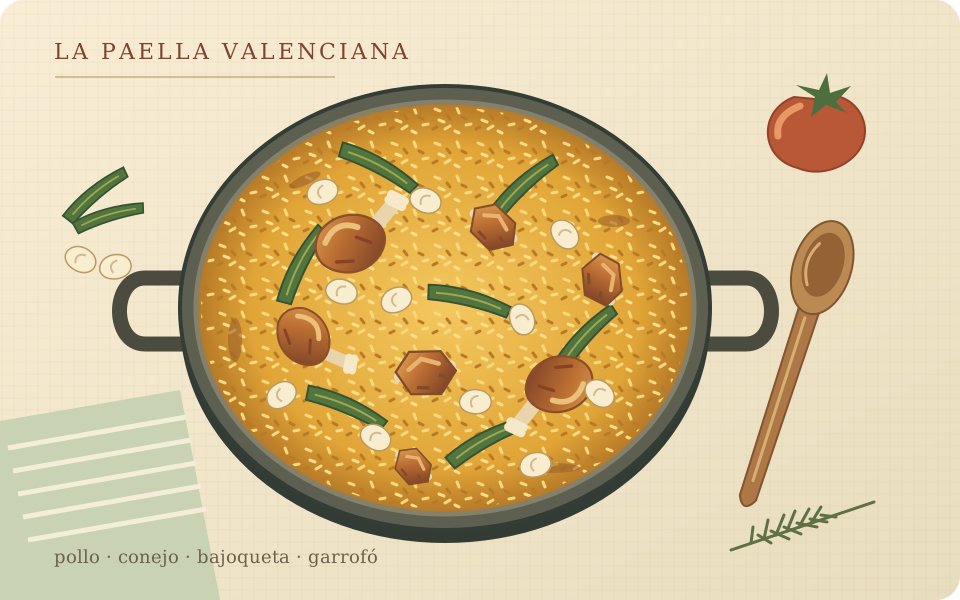
What is actually in paella valenciana?
A prawn on top is not the defining feature. Visit València's traditional recipe uses rice, chicken (pollo), rabbit (conejo), flat green beans and large white beans called garrofón. Tomato, olive oil, saffron and sweet paprika help build the flavour. The rice cooks in a wide, shallow pan, rather than becoming a deep mound of saucy rice.
You may see garrofó, the Valencian name for the large bean, or bajoqueta for the green bean. Menus may use Spanish, Valencian or both. Learn the ingredients, not just one spelling: it makes the next menu easier to read.
There is local variation. Visit València also mentions snails, artichokes and duck as additions, depending on the cook. That does not mean every pan contains them. If rabbit or snails are a problem for you, ask before ordering rather than assuming the kitchen can remove an ingredient from an already prepared base.
Read the rice section, not just the pictures
Arroces means “rice dishes.” It is a category, not another name for paella valenciana. Seafood paella is a different choice; mixta indicates a mixture, commonly meat and seafood. Neither name tells you every ingredient. For a vegetarian meal, check the stock as well as the visible vegetables.
The rice counter · 01
Match the menu to your question
These are practice menu entries, not a restaurant's current offer. Select a dish to concentrate on its wording. No prices are quoted here.
Paella valenciana
The chicken-and-rabbit reference point. Check any additions with the server.
¿Qué lleva la paella valenciana?
What is in the Valencian paella?
Possible answer: Lleva pollo, conejo y verduras. — It contains chicken, rabbit and vegetables.
Paella de marisco
A seafood rice dish, not the chicken-and-rabbit recipe. The fish and shellfish used depend on the kitchen.
¿Lleva pescado, marisco o las dos cosas?
Does it contain fish, shellfish, or both?
If you have an allergy, name it clearly and ask whether the kitchen can safely accommodate it. A dish name is not an allergen check.
More than one kind of rice
- Arroz negro
- Black rice coloured with squid or cuttlefish ink; a seafood dish, not burnt rice.
- Arroz al horno
- Oven-baked rice, traditionally with ingredients such as meat, chickpeas and potato.
- Meloso / caldoso
- Creamy / brothy: texture words, not a promise of particular ingredients.
¿Es seco o caldoso? — Is it dry or brothy? And fideuà uses noodles rather than rice.
Lunch is the tradition, not a ban on dinner
Visit València describes paella as a lunchtime dish. Planning a rice lunch fits that tradition, but “never eat paella at night” turns a preference into a rule. Evening availability depends on the restaurant. Check opening hours and rice service when booking, especially if you have a particular dish in mind.
¿Hay que encargar la paella al reservar? means “Do we need to order the paella when booking?” The answer might be yes, or you might choose at the table. Rice cooked to order takes time; do not treat any guide's cooking time as a guaranteed wait from sitting down to eating.
The table check · 02
One diner, two diners, different tastes
A minimum of two portions is common, according to Visit València, but it is not universal. Choose your situation to practise the useful follow-up.
Dining alone
¿Se puede pedir para una persona?
Can it be ordered for one person?
El mínimo son dos raciones. — The minimum is two portions. If that does not suit you, ask ¿Qué arroces tienen en raciones individuales? — Which rice dishes do you have in individual portions?
Two diners, one rice dish
¿El precio es por persona?
Is the price per person?
Sí, por persona. — Yes, per person. With two portions, a per-person figure is charged twice. Do not mistake it for the price of the whole pan; confirm what your order includes.
Two people want different rice dishes
¿El mínimo es de dos raciones por tipo de arroz? — Is the minimum two portions of each kind of rice?
Two diners do not automatically meet the minimum for two separate pans. If the answer is yes, choose one dish together or ask about alternatives before ordering.
Explore a dish and a table size.
Confirm, then order
Once you understand the portions and price, check the wait:
¿Cuánto tarda en prepararse?
How long does it take to prepare?
Practice reply: Unos cuarenta minutos. — About forty minutes. This is a language example, not a promised waiting time.
Una paella valenciana para dos, por favor.
A Valencian paella for two, please.
Here, para dos tells the server how many people the rice is for. If you miss the reply, use ¿Puede repetirlo más despacio, por favor? — Could you repeat that more slowly, please? You do not need to understand every word to confirm the practical details.
When the pan arrives, socarrat means the toasted rice layer at the bottom. It is not a separate topping. Whether the rice is served onto plates or shared from the pan depends on the setting; follow the service rather than assuming one compulsory ritual.
Take the Spanish beyond the rice menu
For the rest of the meal, read how to order at a restaurant in Spain or how to order tapas. Practise reading at your level in Webbu's Spanish story library, with translations and audio, or sign up for a free weekly Spanish story.