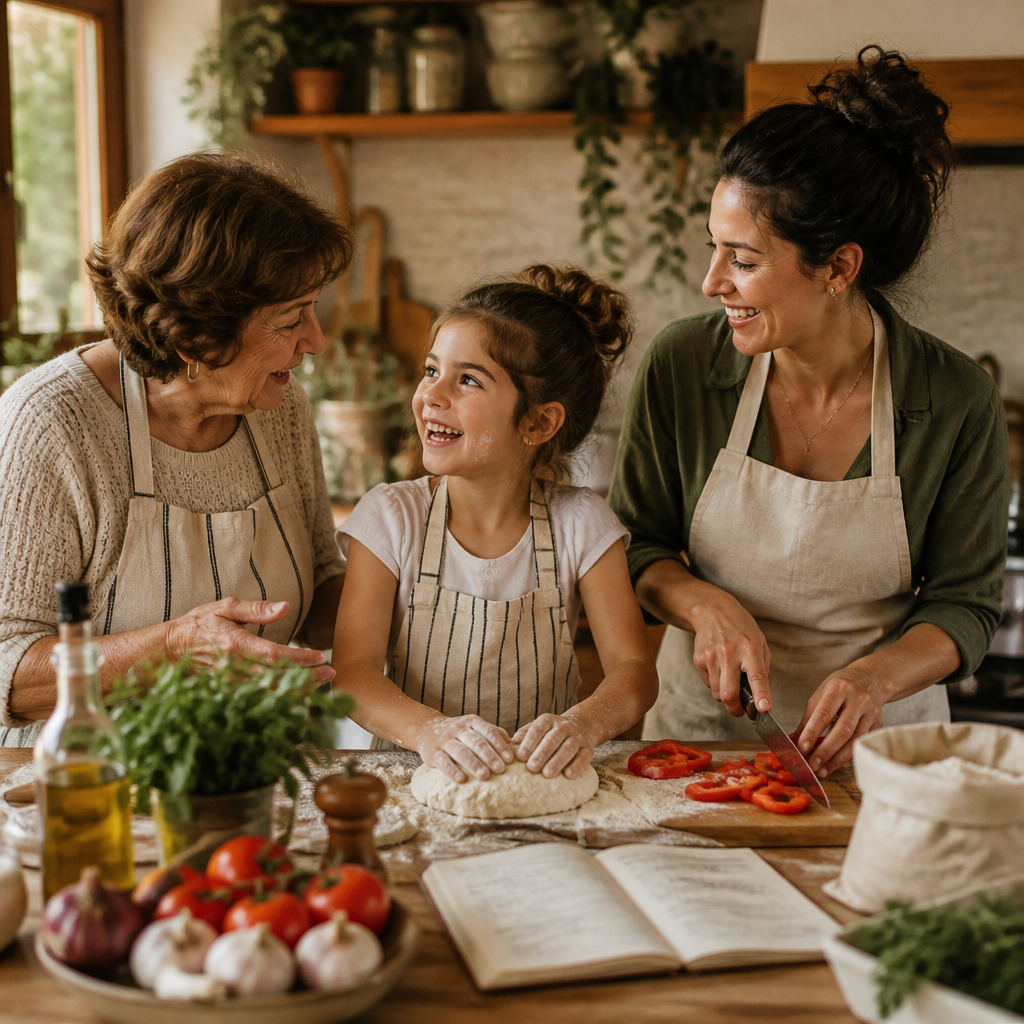
The breakfast board says café + tostada. You know you want coffee and toast; the next decisions are milk, toppings, and size. A useful first order is Un café con leche y una tostada con tomate y aceite, por favor. That means “A coffee with milk and toast with tomato and olive oil, please.”
To order breakfast in Spain: say Buenos días, name your drink and food, and finish with por favor. Choose solo for black espresso, cortado for espresso with a little milk, or con leche for a milkier coffee. For something sweet, ask for churros con chocolate. You can make a complete order without knowing every item on the board.
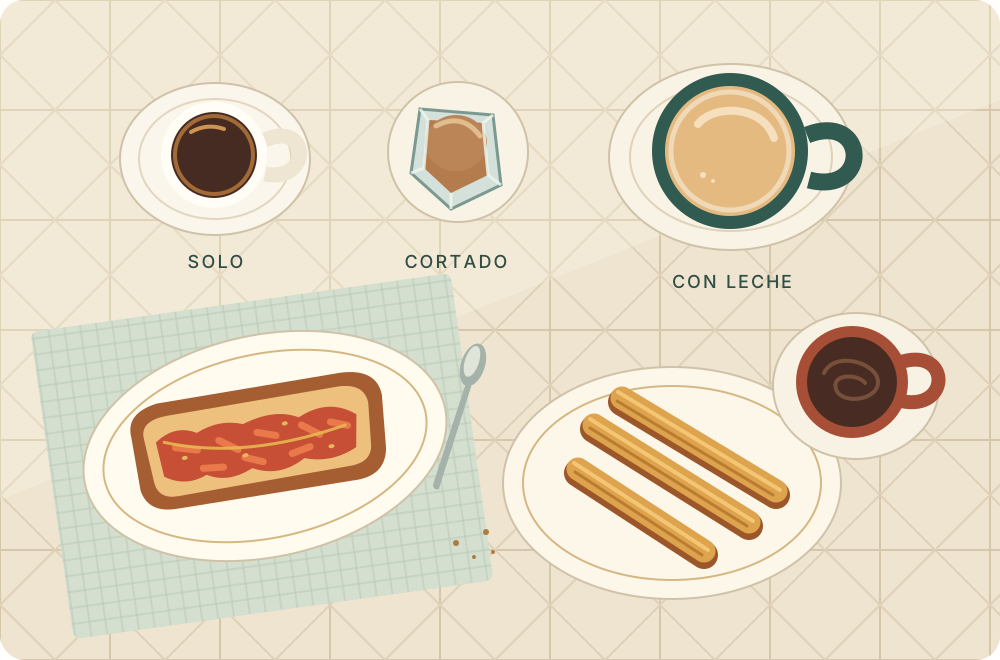
Solo, cortado, or con leche?
In a traditional café, these names usually refer to espresso-based drinks. Un café alone leaves the milk question open. Give the full name if you already know what you want.
- Café solo
- A small black espresso, without milk. It is not a large mug of filter coffee.
- Cortado
- Espresso “cut” with a small amount of milk. A useful choice when you want coffee with some milk, rather than a larger milky drink.
- Café con leche
- Coffee with a more generous amount of milk. A straightforward breakfast order to pair with toast or a pastry.
Don't memorise a supposedly universal ratio. Cup sizes, milk quantities, and local usage differ. If the balance matters, add con poca leche (with little milk) or con más leche (with more milk). In Málaga, you may also see local names such as sombra and nube: both are milky, with nube containing less coffee. You do not need to learn that whole local vocabulary to order breakfast.
¿La leche caliente o templada? asks whether you want the milk hot or lukewarm. Answer Templada, por favor. For decaf, specify descafeinado; you might then hear ¿De máquina o de sobre?, meaning machine-brewed or an instant sachet. Ask about availability rather than assuming every café has both.
Tomato toast: the name depends on the place
Una tostada con tomate y aceite is a clear Spanish request for toast with tomato and olive oil. The bread may be sliced or a split roll, and the tomato may arrive already spread or separately. Tostada describes toast, not one fixed recipe or portion.
In Andalusia, tomato-and-oil toast is a familiar breakfast choice. In Catalonia, look for pa amb tomàquet, the Catalan name for bread with tomato, olive oil, and salt. Traditionally, the cut tomato is rubbed onto the bread. Spanish-language menus may say pan con tomate or pan tumaca. These names point to related preparations; don't expect identical bread or tomato texture everywhere.
In Seville and other Andalusian cafés, ¿Media o entera? asks whether you want a half or whole toast portion. It is a size question, not a question about milk. Una media, por favor. chooses the smaller portion. If you want to add cured ham, say con jamón; tomato toast does not automatically include it.
Churros, porras, and the chocolate question
At a churrería, fried dough is the main attraction. Where a menu distinguishes them, churros are generally thinner and ridged, while porras are thicker and spongier. Names and shapes vary locally; point to the tray if you are unsure which name to use.
Chocolate a la taza is thick hot chocolate, suitable for dipping. Ask for it explicitly if you want it; ordering churros alone does not necessarily include chocolate. You can have coffee instead. Check whether the café sells individual pieces or una ración (a portion), and ask ¿Cuántos vienen en una ración? for “How many come in a portion?” Churros can also be an afternoon snack, not just breakfast.
Your breakfast, in Spanish
Choose an order to practise
These sample conversations show possible follow-ups, not a fixed script. Read all three below, or use the chooser to focus on one. The speaker buttons play the Spanish lines.
Coffee and tomato toast
You: Un café con leche y una tostada con tomate y aceite, por favor.
Server: ¿La leche caliente o templada?
You: Templada, por favor.
Server: ¿Media o entera?
You: Una media, por favor.
You order milky coffee and tomato toast, choose lukewarm milk, then a half portion of toast.
A cortado to take away
You: Un cortado con poca leche, por favor.
Server: ¿Para tomar aquí o para llevar?
You: Para llevar, gracias.
Server: Muy bien. ¿Algo más?
You: No, nada más, gracias.
You request a cortado with little milk, choose takeaway rather than drinking here, and say you want nothing else. Takeaway service depends on the café.
A sweet breakfast
You: Una ración de churros y un chocolate, por favor.
Server: ¿Churros o porras?
You: Churros, por favor. ¿Cuántos vienen en una ración?
Server: Seis churros.
You: Perfecto, gracias.
You order churros and hot chocolate, confirm churros rather than porras, and ask about quantity. Six is this example's answer, not a standard portion.
When the answer comes too quickly
Use ¿Puede repetirlo más despacio, por favor? for “Could you repeat that more slowly, please?” Listen for the alternatives: aquí / llevar, media / entera, caliente / templada. Catching those two words is often enough to answer.
Before paying, ¿Cuánto es? means “How much is it?” If a board advertises a breakfast combination, check what it includes. Adding juice or ham may change the price.
Keep practising everyday Spanish
Next, try ordering at a bakery in Spain or ordering at a restaurant in Spain. For longer conversations with translations and audio, browse Webbu's Spanish short stories.
Get a free Spanish short story each week at your chosen level.